
Physicists · Mathematicians · Quantitative Scientists · Remote · AI Training
“The mathematics is correct…
but the physics makes no sense.”
That’s the gap you’d be paid to close.
AI companies need physicists and quantitative scientists to review model outputs and identify where the reasoning breaks down. No AI background required — your scientific training is the qualification.
These roles are listed via Applied Clinical Judgement (ACJ). ACJ earns a referral fee if you register — disclosed openly, no effect on your pay or application.
Adar Hiremath is the co-founder and CTO of Mercor. This short video walks through the application process, how projects are matched to your expertise, and what the work looks like day to day.
Angela is a medical expert working through Mercor. She describes what the projects involve, how the work fits around her existing commitments, and what the day-to-day experience is like. While her background is clinical, the structure of the work is the same across disciplines.
Problem Writing & Evaluation
Create original Olympiad-level physics or astronomy problems designed to challenge frontier AI models. Identify logical flaws and failures in AI-generated solutions.
LaTeX Proficiency Required
All problem-writing roles require high LaTeX proficiency for formatting problems and solutions. Chain-of-thought reasoning and rigorous derivations are expected.
Remote & Flexible
Work on your own schedule, typically 20–40 hrs/week. Some roles are restricted to US/UK/Canada/EU graduates. Initial terms are ~2 months with extension potential.
Available roles
Mercor seeks Physics PhDs specialising in Advanced Quantum Mechanics, Advanced Electrodynamics, or Advanced Classical Mechanics for a premier project with one of the world’s top AI labs. You’ll contribute deep subject matter expertise to an AI training project, specifically by generating difficult, domain-specific problems that current frontier models struggle to solve correctly. The work is problem-writing and quality evaluation rather than annotation — you are the expert, not the reviewer. Tasks run at 4–6 per week, each taking several hours, requiring rigorous physics expertise and the ability to follow complex instructions precisely. Your contributions directly inform the training data for the next generation of AI systems. This is a fully remote, ongoing role starting in February with rolling applications. Experts are expected to contribute consistently over the project term.
Key requirementsPhD in Physics with specialisation in Advanced Quantum Mechanics, Advanced Electrodynamics, or Advanced Classical Mechanics. Graduate degree from US, UK, Canada, or Western Europe — this role is geography-restricted and UK-based applicants are eligible. High attention to detail. Exceptional written and verbal communication skills in English. Strong proficiency in English required throughout. LaTeX proficiency required for problem formatting. Note: the screening process involves a short AI interview and form, taking approximately 20–40 minutes in total.
Step 1 of 2 — Check your fit
Quick fit check — 8 questions
1. Your qualification and research background
2. How would you rate your LaTeX proficiency?
3. Your written English
4. Weekly availability for this project
5. Country of residence
6. How current is your engagement with your specialism?
7. Specialism alignment with this role
8. Research influence and seniority
Mercor seeks Physics PhDs specialising in Statistical Mechanics, Condensed Matter Physics, or Atomic, Molecular and Optical (AMO) Physics for a premier AI training project with one of the world’s leading AI labs. You will contribute deep domain expertise by generating difficult, high-quality problems in your specialism — the kind that expose genuine reasoning failures in frontier AI models. This is not annotation work; it requires the ability to construct challenging, original problems and evaluate solutions with the rigour expected at a peer-review level. Tasks run at 4–6 per week, each requiring several hours of focused expert effort. The work requires rigorous physics expertise and an ability to follow complex instructions precisely, including formatting requirements. Your contributions help create training data that will directly shape the quality of next-generation AI reasoning in your field. The role is ongoing from February with rolling applications and a fully remote structure.
Key requirementsPhD in Physics with specialisation in Statistical Mechanics, Condensed Matter Physics, or Atomic, Molecular and Optical (AMO) Physics. Graduate degree from US, UK, Canada, or Western Europe — geography-restricted, UK-based applicants are eligible. Exceptional written English. High attention to detail. LaTeX proficiency required. Screening involves a short AI interview and form, approximately 20–40 minutes total. Minimum 20 hrs/week commitment expected.
Step 1 of 2 — Check your fit
Quick fit check — 8 questions
1. Your qualification and research background
2. How would you rate your LaTeX proficiency?
3. Your written English
4. Weekly availability for this project
5. Country of residence
6. How current is your engagement with your specialism?
7. Specialism alignment with this role
8. Research influence and seniority
This role focuses on evaluating and improving how AI models explain, reason about, and respond to physics questions across both foundational and advanced topics. Unlike the problem-writing roles above, the emphasis here is on assessing the quality of AI outputs rather than generating adversarial problems from scratch. You will write and refine prompts designed to guide model behaviour in physics contexts, evaluate LLM-generated responses for conceptual accuracy, mathematical correctness, and reasoning quality, conduct fact-checking using authoritative sources, and annotate model outputs by identifying strengths, inaccuracies, and areas for improvement. You will also assess clarity, structure, and appropriateness of explanations for different audience levels, and apply consistent evaluation standards using detailed rubrics and taxonomies. This role is broader in scope than pure problem-writing and is particularly well suited to physicists who are strong written communicators, have significant hands-on LLM experience, and are comfortable working to structured evaluation frameworks. Location is restricted to US, UK, and Canada — UK-based applicants are eligible.
Key requirementsPhD in Physics or a closely related field. Deep expertise in one or more sub-domains: Classical Mechanics and Dynamics, Quantum Physics, Relativity, Cosmology, or High-Energy Physics. Significant experience using large language models is essential — you must understand how and why people use them. Excellent written English with the ability to explain complex physics concepts clearly. Strong attention to detail. Demonstrated experience reviewing or editing technical or academic writing. Prior experience with RLHF, model evaluation, or data annotation is advantageous. Location restricted to US, UK, or Canada.
Step 1 of 2 — Check your fit
Quick fit check — 7 questions
1. Your qualification and research background
2. How would you rate your LaTeX proficiency?
3. Your written English
4. Weekly availability for this project
5. Country of residence
6. How much experience do you have using large language models (ChatGPT, Claude, Gemini etc.)?
7. Prior AI evaluation, annotation, or RLHF experience
This is not a specific project posting — it is an open application to join Mercor’s Physicist Expert Network. By applying here, you enter the pool from which Mercor matches physicists to AI training projects as they become available. The advantage of the talent network is flexibility: you apply once, complete your profile and pass an AI interview, and Mercor then invites you to interview for specific opportunities that match your expertise and schedule preferences, rather than requiring you to apply role by role. Projects in the network span a wide range of physics sub-disciplines and task types — from problem-writing and solution evaluation to prompt engineering and model annotation. Typical project commitments run from 15 to 30 hours per week. Payments are processed weekly via Stripe or Wise. If you hold physics expertise but are uncertain which specific role above best fits your background, or if none of the listed roles precisely matches your specialism, the talent network is the most practical entry point. It is also a good option if your schedule availability is variable and you want to be considered for shorter or part-time project engagements as they arise.
Key requirementsProfessional experience in one or more of: theoretical or computational modelling, experimental design and data analysis, scientific programming, or domain-specific physics research. Strong written communication skills in English. Ability to work independently and reliably in a remote environment. No specific geography restriction applies to the talent network itself, though individual projects within it may carry location requirements. No H1-B or STEM OPT support at this time — check Mercor.com directly if this applies to you.
Step 1 of 2 — Check your fit
Quick fit check — 7 questions
1. Your qualification and research background
2. How would you rate your LaTeX proficiency?
3. Your written English
4. Weekly availability for this project
5. Country of residence
6. Your physics expertise breadth
7. Comfort with variable, project-based scheduling
Mercor seeks Physics PhDs specialising in General Relativity, Astrophysics, or Cosmology for a premier project with one of the world’s top AI labs. You’ll contribute deep subject matter expertise to an AI training project, specifically by generating difficult, domain-specific problems that current frontier models struggle to solve correctly. The work is problem-writing and quality evaluation rather than annotation — you are the expert, not the reviewer. Tasks run at 4–6 per week, each taking several hours, requiring rigorous physics expertise and the ability to follow complex instructions precisely. Your contributions directly inform the training data for the next generation of AI systems. This is a fully remote, ongoing role starting in February with rolling applications.
Key requirementsPhD in Physics with specialisation in General Relativity, Astrophysics, or Cosmology. Graduate degree from US, UK, Canada, or Western Europe — this role is geography-restricted and UK-based applicants are eligible. High attention to detail. Exceptional written and verbal communication skills in English. LaTeX proficiency required. Screening involves a short AI interview and form, approximately 20–40 minutes total.
Step 1 of 2 — Check your fit
Quick fit check — 8 questions
1. Your qualification and research background
2. How would you rate your LaTeX proficiency?
3. Your written English
4. Weekly availability for this project
5. Country of residence
6. How current is your engagement with your specialism?
7. Specialism alignment with this role
8. Research influence and seniority
Micro1 is seeking Physics Experts to support AI training by evaluating, curating, and annotating complex physics content across multiple domains. You will create prompts, responses, and correction guidelines, assess AI outputs for technical accuracy and depth, and collaborate with data scientists and engineers to refine model performance. This is a broad-based role suited to physicists with strong breadth across classical mechanics, electromagnetism, and quantum physics, combined with the ability to explain complex concepts clearly in writing — all done remotely on a flexible contract basis.
Key requirements Advanced degree (MSc or PhD) in Physics or a closely related field. Proven expertise across a broad range of physics topics. Exceptional written English with the ability to distil complex concepts clearly. Experience in technical content creation, reviewing, or education. Ability to work independently in a remote environment. No H1-B or STEM OPT support at this time.
Quick fit check — 5 questions
1. Your highest qualification in physics
2. Breadth of physics knowledge
3. Technical content creation or review
4. Explaining complex physics to non-specialists
5. Remote independent working
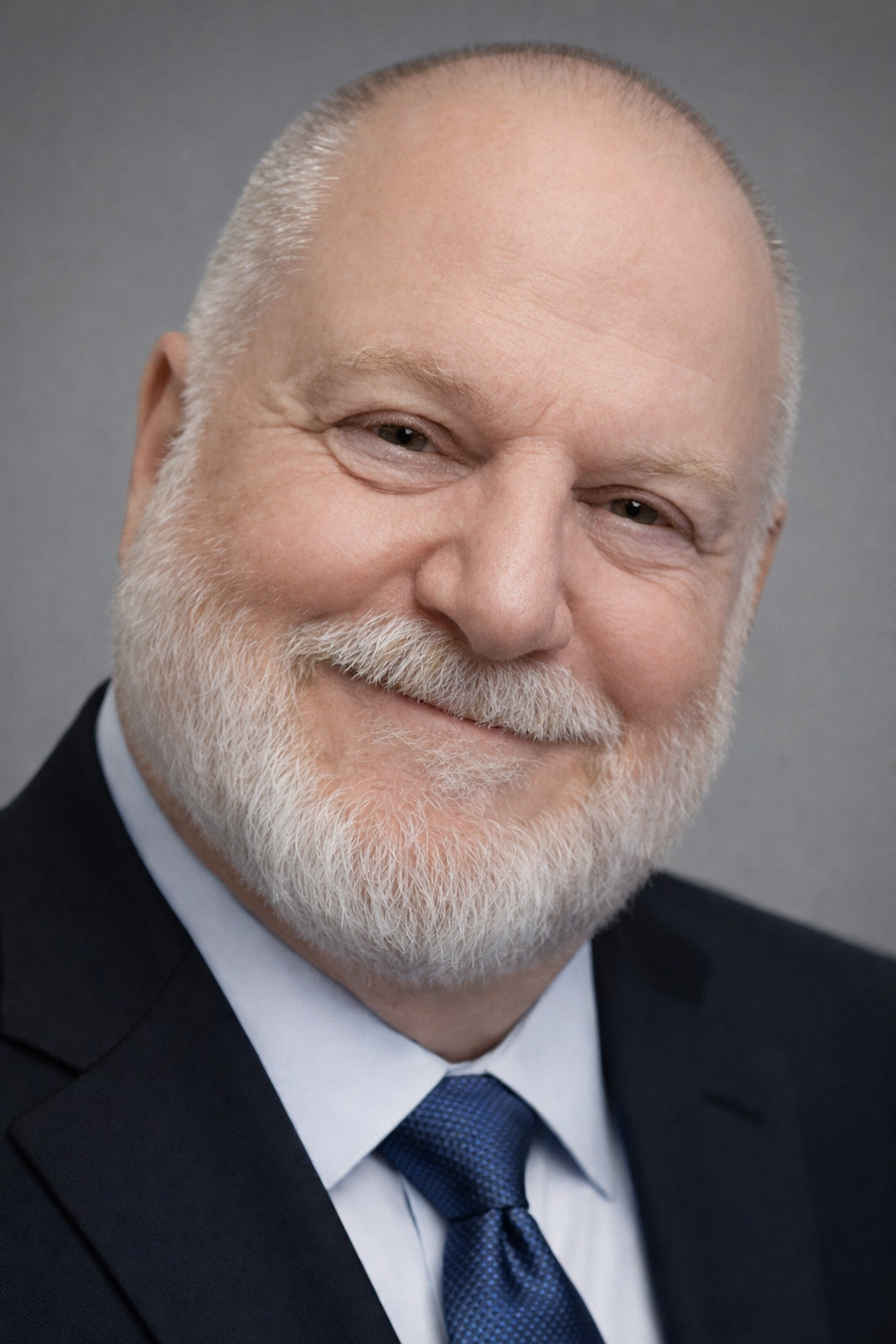
Sean Key
Digital Health Senior Programme Manager · 29 years’ NHS & private sector experience
I run Applied Clinical Judgement to connect researchers and scientists to AI training roles on platforms like Mercor and Micro1. I contacted you because your published research suggests you have the kind of quantitative expertise these platforms are actively looking for. Not a scientist myself — my background is digital health programme management. ACJ earns a referral fee if you register; this is disclosed openly and has no effect on your pay or how Mercor assesses you.